NASA's ISS deorbit plan
The largest object ever assembled in orbit has to come home. Here is how NASA plans to steer roughly 430 tonnes into the remote South Pacific.
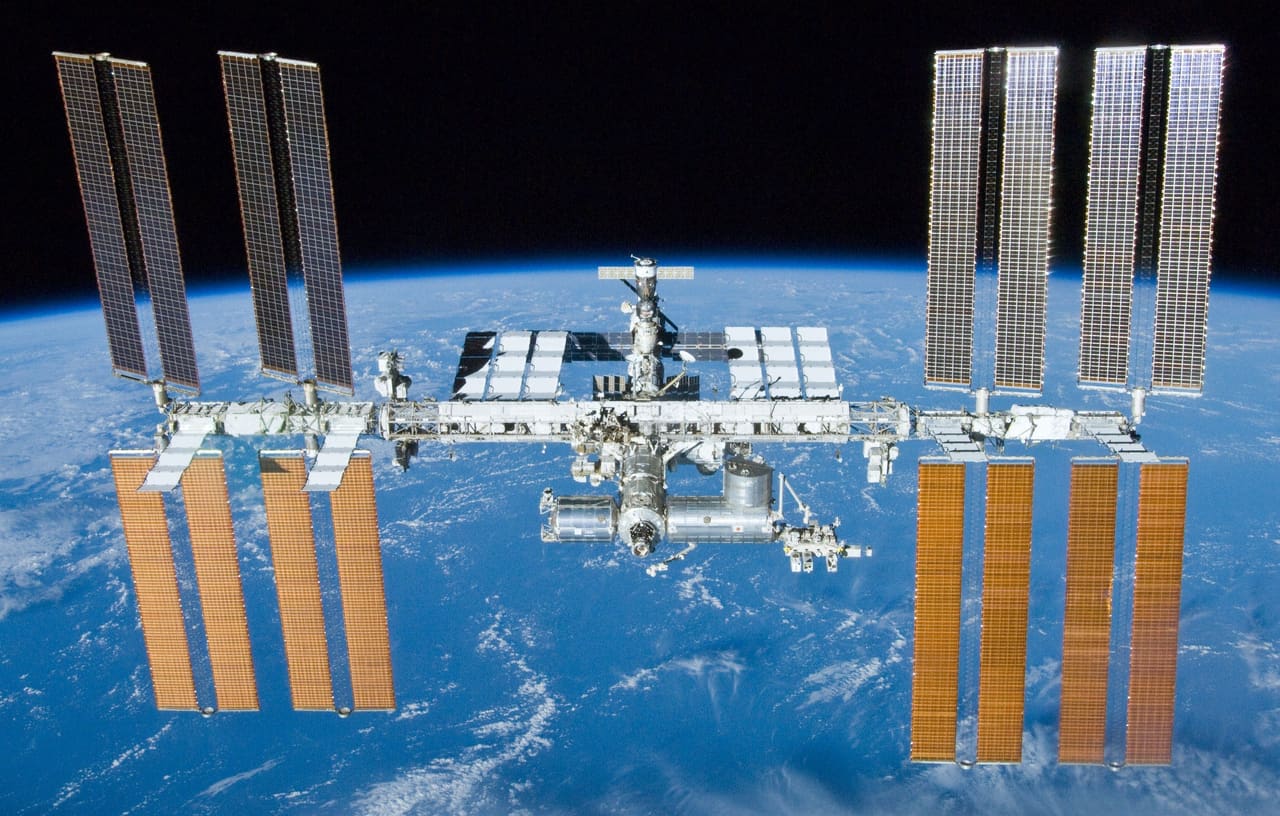
The NASA ISS deorbit plan sets out how the International Space Station will end its life: a controlled fall from orbit into the remote South Pacific, guided by a purpose-built spacecraft. NASA expects to conclude station operations around 2030 and to perform the ISS deorbit near 2031. To do it, the agency has hired SpaceX to build a US Deorbit Vehicle under a contract worth up to $843 million. The station has flown for more than a quarter century and now weighs roughly 430 tonnes, which makes its disposal the largest and most demanding controlled reentry ever attempted. This page lays out what happens to the station, why NASA chose to bring it down rather than save it, and where the pieces will go.
What happens to the ISS after 2030
The International Space Station is scheduled to reach the end of its operational life in 2030. The main partners, the United States, Japan, Canada, and the European Space Agency, are committed to funding and operating the station through that year, while Russia has committed through at least 2028. After 2030, the plan is retirement, not renovation.
Retirement here means removal from orbit. The station cannot simply be switched off and left in place. At its altitude it still feels atmospheric drag, so without regular reboosts it would slowly lose altitude and eventually reenter on its own, uncontrolled, with no say over where its surviving pieces land. For an object this massive, that outcome is unacceptable. So NASA intends to manage the descent from start to finish, lowering the station on a planned schedule and steering its final plunge toward empty ocean. The crew will depart before the deorbit maneuver, leaving the station uncrewed for its last act. To understand what that fall will look like physically, our explainer on what happens during atmospheric reentry covers the heat, breakup, and survival of falling hardware.
Why deorbit instead of boosting or saving it
Three alternatives get raised whenever ISS retirement comes up: boost it to a higher parking orbit, preserve it as a museum, or leave it alone. Each fails on practical grounds.
Boosting the station to a stable graveyard orbit sounds tidy, but the physics is unforgiving. Moving 430 tonnes to a much higher altitude would demand an enormous amount of propellant, delivered by many launches, at a cost that dwarfs a single controlled deorbit. And even parked high, the station would remain a giant target for collisions, slowly shedding debris over decades and adding to the orbital hazard rather than removing it.
Saving the station as an orbital museum is not feasible either. No vehicle exists that could gently lower a structure the size of a football field through the atmosphere and land it intact. The ISS was assembled in space across dozens of flights and was never designed to come home in one piece. Returning even a single large module safely would be a major project of its own.
Leaving it alone is the worst option. An abandoned station would decay and reenter without control, scattering surviving debris along an unpredictable ground track that could cross populated regions. Against those choices, a planned, steered deorbit into remote ocean is the safest path, which is why NASA settled on it.
How NASA will deorbit the station (the US Deorbit Vehicle)
The centerpiece of the plan is a new spacecraft called the US Deorbit Vehicle, or USDV. In June 2024 NASA selected SpaceX to develop and deliver it under a single-award contract with a total potential value of $843 million. The arrangement is unusual for a recent NASA-SpaceX deal: rather than buying the deorbit as a commercial service, NASA will take ownership of the vehicle after SpaceX builds it and will operate it through the mission.
The concept of operations is straightforward in outline. As the end approaches, the station’s altitude will be lowered gradually using a mix of natural atmospheric drag and reboost maneuvers. The USDV will then launch and dock with the station. Once attached and with the crew long gone, the vehicle will fire its engines in a series of burns to drop the station out of orbit on a controlled trajectory, targeting a precise reentry over open water. The station and the deorbit vehicle are expected to break up destructively as part of that reentry. The scale of the burn is what makes this hard: the USDV has to have enough propulsion to command the descent of a structure far larger and heavier than anything previously steered down on purpose.
Will any of the ISS survive reentry?
NASA expects the station to break apart and largely burn up as it falls, but nobody assumes total demise. The ISS is big and contains dense, heat-resistant components, and reentry physics says the toughest of those can reach the surface. Between 10 and 40 percent of a typical satellite’s mass survives depending on materials, and while the station is not a typical satellite, its heaviest steel and titanium elements are the sort of parts that tend to last through the heat.
That expectation is exactly why the descent will be steered. If some fragments are going to survive, the responsible move is to make sure they come down where there are no people. The plan does not rely on the station vanishing. It relies on aiming whatever survives at the emptiest ocean on Earth. The precedent for this is Russia’s Mir station, which was deorbited under control in 2001 and broke up over the same remote region, with surviving pieces falling into the sea. Our history of the Mir deorbit covers how that first large-station disposal was carried out and what NASA learned from it.
Where it will come down (Point Nemo)
The target is Point Nemo, the oceanic pole of inaccessibility and the single most remote point in any ocean. It sits in the South Pacific at roughly 48.9 degrees south and 123.4 degrees west, more than 2,600 km from the nearest land in any direction. That isolation is the whole point. A reentry aimed there keeps surviving debris about as far from human settlement as geography allows.
Point Nemo is not a new choice. The region is formally known as the South Pacific Ocean Uninhabited Area and has served as a spacecraft cemetery for decades. Mir came down there in 2001, and the area has received hundreds of retired spacecraft and cargo vehicles over the years. For the ISS, aiming at this well-established disposal zone means following a proven approach rather than inventing a new one.
Environmental concerns
The plan is not free of criticism. As NASA has detailed its intentions, some ocean scientists have pushed back on the idea of using the deep sea as a dumping ground for a 430-tonne structure. Their concerns fall into two areas. One is the material that survives to the ocean floor: metals, composites, and hardware sinking into a deep-sea environment that is poorly studied and slow to recover from disturbance. The other is atmospheric: vaporized metals from reentering spacecraft add particles to the upper atmosphere, and researchers are still measuring what large-scale reentry pollution does over time.
Experts have also flagged a governance gap. When agencies steer debris into the high seas, they generally incur no legal obligation to clean up or pay for environmental remediation, which some argue removes any incentive to find gentler disposal methods. Space agencies counter that the remote ocean remains the safest option for people on the ground and that the alternatives carry greater risk. The debate does not change the current plan, but it is shaping how future large objects may be brought down, and it is likely to grow louder as the 2030 retirement approaches.
Sources
Frequently asked questions
What is NASA's ISS deorbit plan?
NASA plans to end International Space Station operations around 2030 and bring the station down through a controlled reentry near 2031. A dedicated US Deorbit Vehicle, built by SpaceX under a contract worth up to $843 million, will dock with the station and fire its engines to steer the descent. The target is the remote South Pacific around Point Nemo.
Why not just boost the ISS to a higher orbit instead of destroying it?
Raising the roughly 430-tonne station to a stable graveyard orbit would take far more fuel and money than bringing it down, and it would leave a giant object as a long-term collision hazard. Preserving it as a museum in orbit is not practical either, since no vehicle can safely lower and land a structure that large. A controlled reentry is the safest disposal option.
When will the ISS be deorbited?
NASA expects station operations to conclude in 2030, with the United States, Japan, Canada, and ESA committed through that year and Russia through at least 2028. The deorbit maneuver itself is planned for around 2031, after the crew has departed and the deorbit vehicle is in place.
Will any of the ISS survive reentry?
NASA expects the station to break apart and largely burn up during reentry, but its size means some dense components could survive to the surface. That is why the descent will be steered toward open ocean far from people. Aiming for Point Nemo keeps any surviving debris away from land.
Where will the ISS come down?
The target is Point Nemo, the most remote point in the ocean, more than 2,600 km from the nearest land in the South Pacific. It already serves as a spacecraft cemetery and received Russia's Mir station in 2001. The area is formally known as the South Pacific Ocean Uninhabited Area.
Is deorbiting the ISS bad for the environment?
Some ocean scientists have raised concerns about dropping a large mass of metals and materials into the deep sea and about pollution from vaporized debris in the upper atmosphere. Space agencies favor the remote ocean because it keeps people safe and carries no legal cleanup obligation. The long-term ecological effects are still debated.