Satellite falling to Earth
Reentries happen most days now. Here is how often satellites come down, what survives the fall, and how much risk any of it carries.
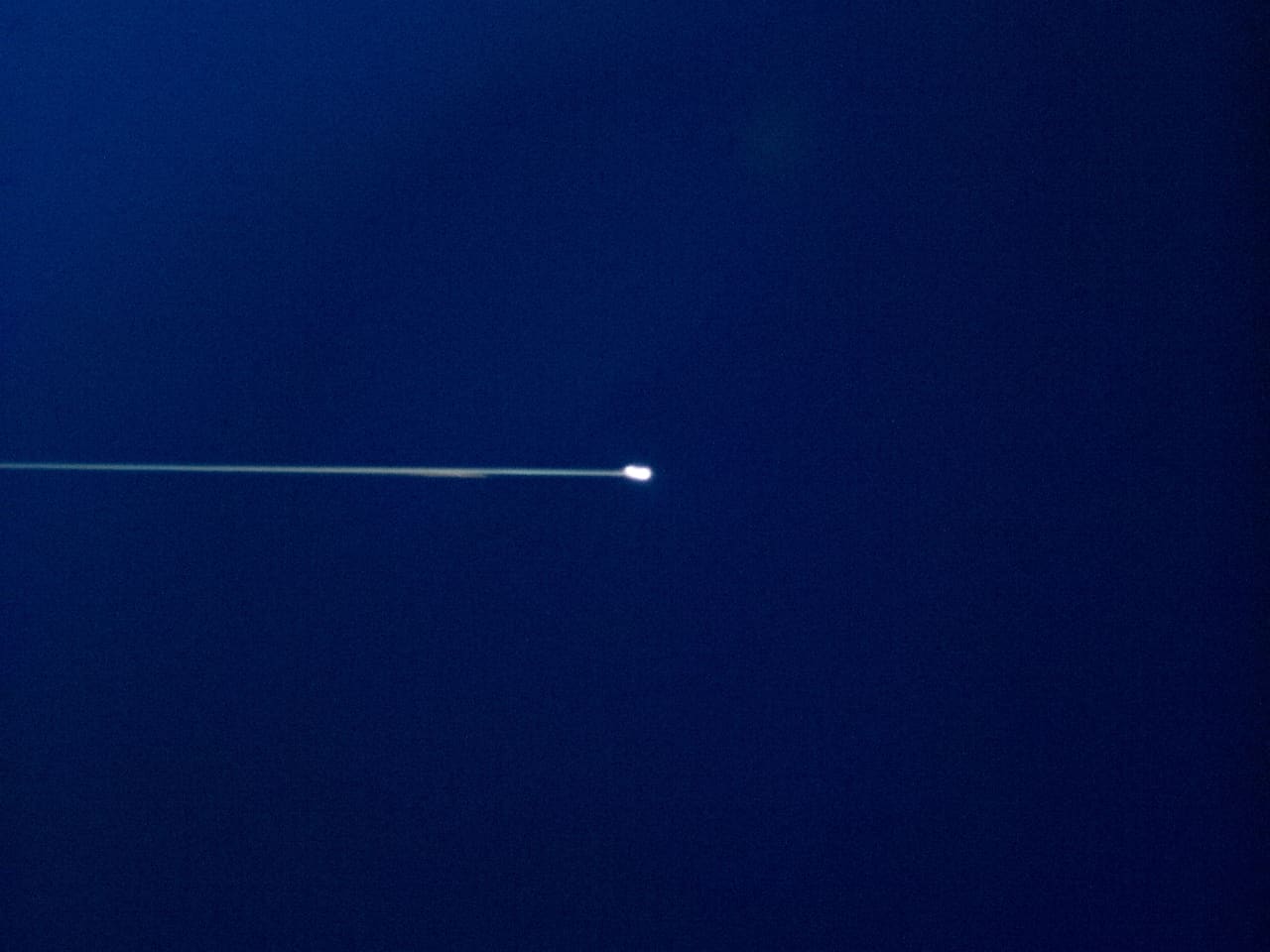
A satellite falling to Earth used to make global headlines. Now it happens most days, sometimes several times in a single day. European Space Agency tracking shows that intact satellites and spent rocket bodies reenter the atmosphere on average more than three times a day, and the rate climbs as large satellite fleets age out of service. Almost all of this material burns up long before it reaches the ground. The fragments that do survive land, in the overwhelming majority of cases, in open ocean or across empty terrain. This page explains how often reentries happen, what the fall looks like from space to surface, and how much risk any of it carries for people below.
How often satellites fall to Earth
The short answer is: constantly. ESA’s 2025 Space Environment Report, drawing on 2024 data, records intact satellites and rocket bodies reentering more than three times a day. That figure counts only the larger tracked objects. Smaller pieces of debris return far more often.
The main driver of the recent jump is the growth of commercial constellations. SpaceX’s Starlink network alone now sends one to two satellites back into the atmosphere every day, with surges of four or more during busy stretches. The trend is steep. Starlink saw just 2 reentries in 2020, then 78 in 2021, 99 in 2022, 88 in 2023, and a leap to 316 in 2024. Part of that 2024 spike came from the Sun. Late 2024 brought solar maximum, the peak of the 11-year solar cycle, when flares and coronal mass ejections puff up the upper atmosphere and increase drag on low-flying spacecraft. Denser air at altitude pulls satellites down faster than planners expect.
Behind those reentries sits a crowded sky. Roughly 40,000 objects are tracked in orbit today, of which about 11,000 are working payloads. The rest is dead hardware: spent upper stages, defunct satellites, and fragments from past collisions and explosions. Estimates put the number of debris pieces larger than 1 cm above 1.2 million. Every one of those objects will eventually come down, and the schedule for the biggest ones is worth watching. You can follow the recent returns on our reentry watch, which logs the objects that have come back through the atmosphere.
What happens as a satellite reenters
The fall begins quietly. A satellite in low orbit skims the thin edge of the atmosphere for months or years, losing a little speed on each pass. Once it drops to around 120 km, the air grows thick enough that drag takes over quickly. This altitude is called the reentry interface, and it marks the point where a gradual decay turns into a fast, fiery plunge.
Below that line, friction and compression heat the surface past 1,600 degrees Celsius. Solar panels and antennas tear away first. The main body tumbles, glows, and starts to come apart around 80 km, which is roughly where ESA’s ERS-2 satellite fragmented on its way down in 2024. Lightweight aluminum structures melt and vaporize in this zone. Denser components with higher melting points, such as titanium tanks and steel pressure vessels, ride the heat out and keep falling. Those survivors slow to a few hundred kilometers per hour by the time they near the ground. For a full walk through the physics of the descent, see our explainer on what happens during atmospheric reentry.
The whole event is fast but not instant. A large reentry can stay visible from the ground for a minute or more as a train of glowing fragments crosses the sky, which is one reason people often mistake it for something else entirely.
Is falling space debris dangerous?
For any individual person, the danger is close to zero. The physics helps here: most material never reaches the ground, and what does tends to land far from anyone. Regulators use a standard safety threshold of a 1-in-10,000 chance of casualty for a single uncontrolled reentry, and agencies aim to hold objects below it or bring them down under control. NASA notes that some surviving fragments hit the ground with under 15 joules of kinetic energy, a level below which human injury is very unlikely.
The record backs this up. Across 67 years of spaceflight, thousands of tons of hardware have reentered, and there has never been a confirmed report of a human injury from any of it. Property damage is rare too, though it is not unheard of. In March 2024 a cylindrical metal stanchion survived reentry and crashed through the roof of a home in Naples, Florida. It weighed about 1.6 pounds, measured roughly four inches tall, and was made of a heat-resistant nickel alloy called Inconel. NASA later confirmed it came from flight support equipment used to mount old batteries on a cargo pallet released from the ISS in 2021. That hardware was expected to burn up completely. It did not, and the case became a study in why reentry survival is hard to predict.
The aggregate risk is a different question from the individual one. As constellations grow, the total number of reentries rises, and safety analysts have started modeling small but nonzero long-term risks to aircraft and people on the ground. The individual odds stay tiny. The collective exposure is what regulators now watch.
Space junk vs meteor: how to tell them apart
If you catch a bright streak overhead, a few clues separate reentering hardware from a natural meteor.
Speed and duration are the biggest tells. A meteor is a grain-to-pebble-sized rock hitting the atmosphere at tens of kilometers per second. It flares and disappears in a second or two. A reentering satellite moves far slower, and a large one can stay in view for 30 seconds to a couple of minutes as it crosses a wide arc of sky.
Fragmentation is the second tell. Meteors usually appear as a single point of light with a short tail. A breaking-up satellite often splits into several glowing chunks that travel in loose formation, sometimes with sparks trailing behind. The color can shift from white to orange as different metals burn.
Path is the third. Meteors can come from almost any angle, including steep downward streaks. Reentries follow the shallow, near-horizontal track of an orbit decaying into the atmosphere, so they tend to skim across the sky rather than drop toward the horizon.
High-profile reentries
A handful of returns have shaped public understanding of this subject. ERS-2, a European Earth-observation satellite launched in 1995, made an uncontrolled reentry over the North Pacific between Alaska and Hawaii on 21 February 2024. Its largest possible surviving fragment was estimated at about 52 kg, and it came down over open water with no reported damage.
Older events loom larger in memory. NASA’s Skylab station scattered debris over Western Australia in 1979. China’s Tiangong-1 prototype station made an uncontrolled return over the South Pacific in 2018. Russia’s Mir station was brought down on purpose in 2001, aimed at the remote South Pacific. The 2024 Naples strike stands out precisely because ground damage is so rare, which is why recovered pieces get studied closely. You can browse confirmed cases of surviving hardware in our archive of recovered debris.
What is being done about it
The rules are tightening. For decades the guiding standard has been the 25-year rule, which asks operators to remove satellites from low orbit within 25 years of the end of their mission. Several agencies, including the FAA and NASA, have pushed toward a stricter five-year target for new missions. Compliance is improving: ESA reports that about 90 percent of rocket bodies in low orbit now meet the older 25-year standard, and in 2024, for the first time, controlled reentries of launcher stages outnumbered uncontrolled ones.
Design is changing too. Engineers now build some hardware for demise, choosing materials and shapes that break up and burn more completely so less reaches the ground. For the biggest objects, operators plan controlled reentries that steer surviving debris toward Point Nemo, the most isolated stretch of ocean on the planet, more than 2,600 km from the nearest land. That is where NASA intends to bring down the International Space Station at the end of its life.
None of this eliminates the falling hardware. It manages where and how the hardware comes down. As launch rates rise, the balance between how much we put up and how safely we bring it back down will define the next decade of orbital safety.
Sources
Frequently asked questions
How often does a satellite fall to Earth?
On average, an intact satellite or rocket body reenters more than three times a day, according to ESA's 2025 Space Environment Report using 2024 data. Starlink alone drops one to two spacecraft back into the atmosphere daily, with peaks of four or more. The rate has climbed sharply as large constellations reach the end of their working lives.
Can a falling satellite hit my house?
The odds are extremely low. In 67 years of spaceflight there has never been a confirmed human injury from reentering debris. One documented property strike happened in March 2024, when a metal stanchion from the International Space Station punched through a roof in Naples, Florida, but no one was hurt.
How much of a satellite survives reentry?
Between 10 and 40 percent of a satellite's mass can reach the ground, depending on its materials. Dense parts with high melting points, such as titanium fuel tanks and steel pressure vessels, survive most often. Lighter aluminum structures usually melt and vaporize high in the atmosphere.
Where do most falling satellites land?
Water covers about 70 percent of the planet, so most surviving debris lands in the ocean. Controlled reentries are aimed at Point Nemo in the remote South Pacific. Uncontrolled reentries scatter over whatever ground track they happen to follow, which is usually open ocean or empty land.
How do I know if I saw a satellite reentry or a meteor?
A reentry moves slowly across the sky and can stay visible for a minute or more, often splitting into several glowing fragments that travel together. A meteor flashes and vanishes in a second or two. Reentries also tend to move on a shallow, near-horizontal path.
Is space junk getting worse?
Yes. About 40,000 objects are now tracked in orbit, and more than a million debris fragments larger than 1 cm are estimated to exist. As constellations expand and old hardware comes down, reentry counts keep rising year over year.